Threat for farmers
Microplastics contamination in agricultural soils is a complex, multi-faceted problem affecting every level of the food system.
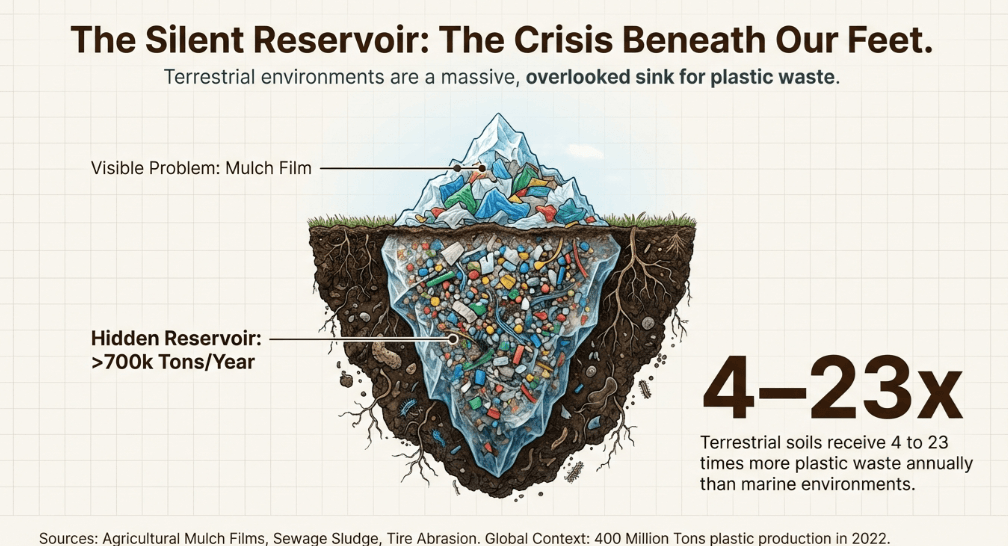
Growing Contamination
The problem is growing. Without intervention, microplastic contamination in agricultural soils will continue to accumulate, threatening food security and soil health.
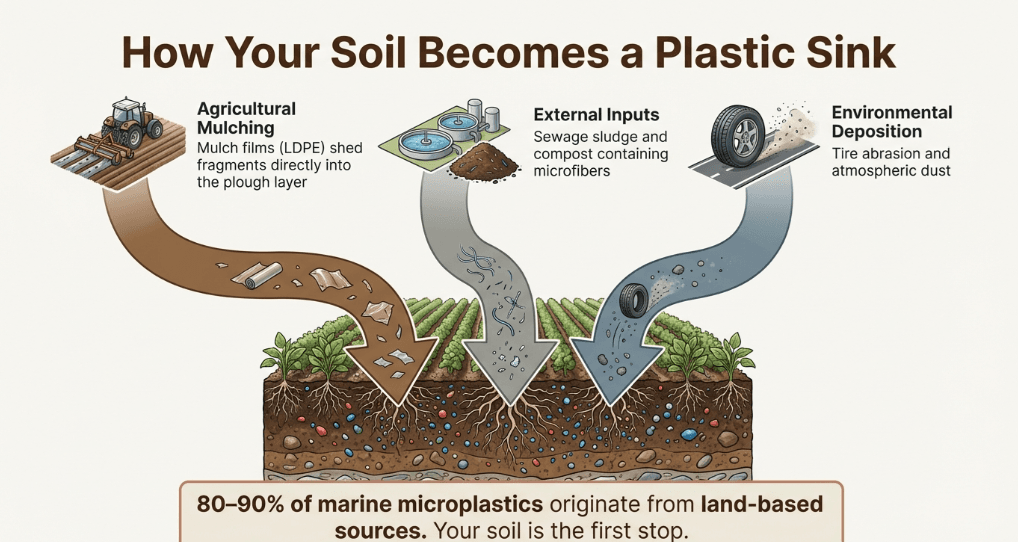
Soils as Plastic Sinks
Agricultural soils are accumulating microplastics from various sources, creating long-term contamination that affects soil health and crop growth.
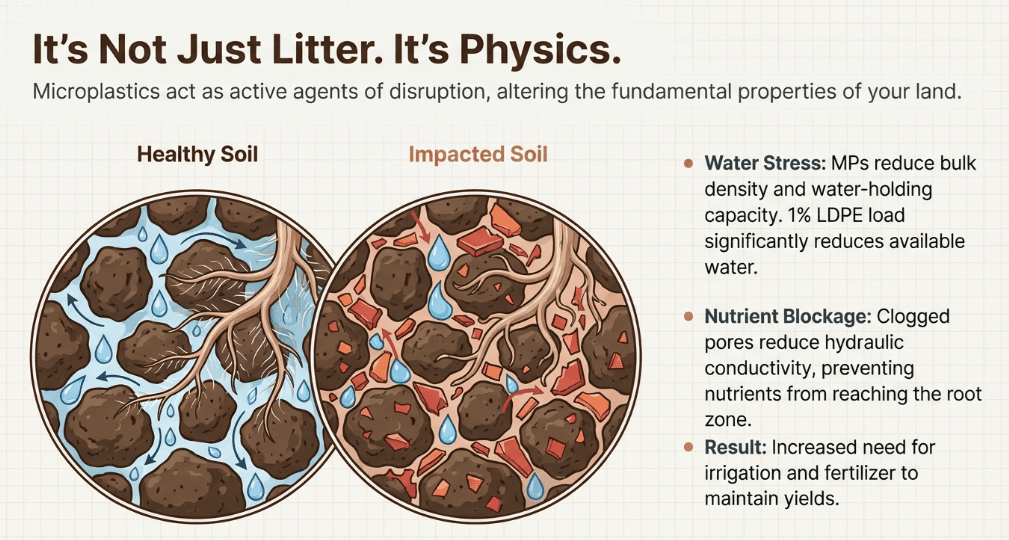
Impact on Soil & Crops
Microplastics disrupt soil structure, water retention, and nutrient availability, directly impacting crop health and yields.
Threat for the Food Web
Microplastics don't stay in the soil, they move through the entire food chain, from soil organisms to crops, from crops to livestock, and ultimately into human food.
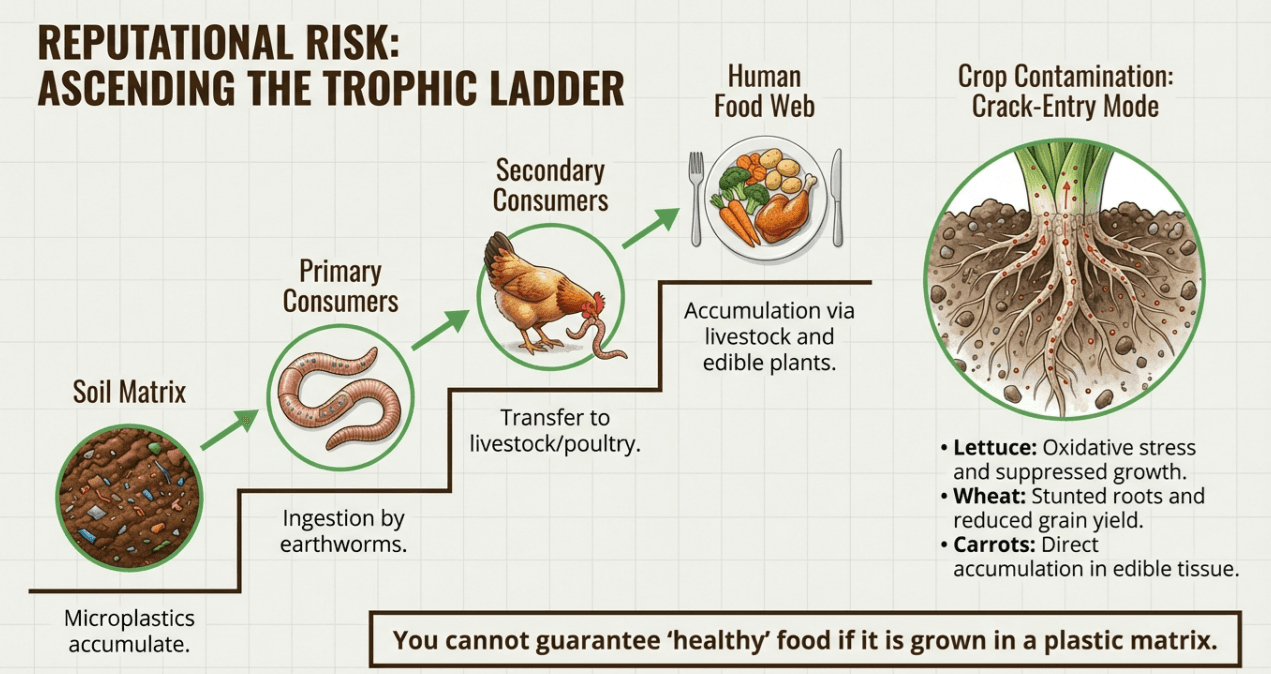
The Pathway of Contamination
1. Soil Matrix
Microplastics accumulate in agricultural soils from various sources including plastic mulches, compost, irrigation water, and atmospheric deposition.
2. Primary Consumers
Earthworms and other soil organisms ingest microplastics, which then accumulate in their tissues.
3. Crops
Plants directly uptake microplastics through their root systems, leading to accumulation in edible tissues. Crops can also be contaminated through contact with contaminated soil and water.
4. Secondary Consumers
Livestock and poultry consume contaminated crops and soil organisms, transferring microplastics up the food chain and accumulating them in meat, eggs, and dairy products.
5. Human Food Web
Microplastics enter human diets through consumption of contaminated crops, meat, eggs, and dairy products, completing the contamination cycle.
Ready to Address the Problem?
Our microbial remediation solution transforms microplastics into benign substances, breaking the contamination cycle at its source.