For Farmers: Protect Your Yields & Market Access
Transform microplastics into benign substances in your soil to protect crop health, increase yields, and access premium markets
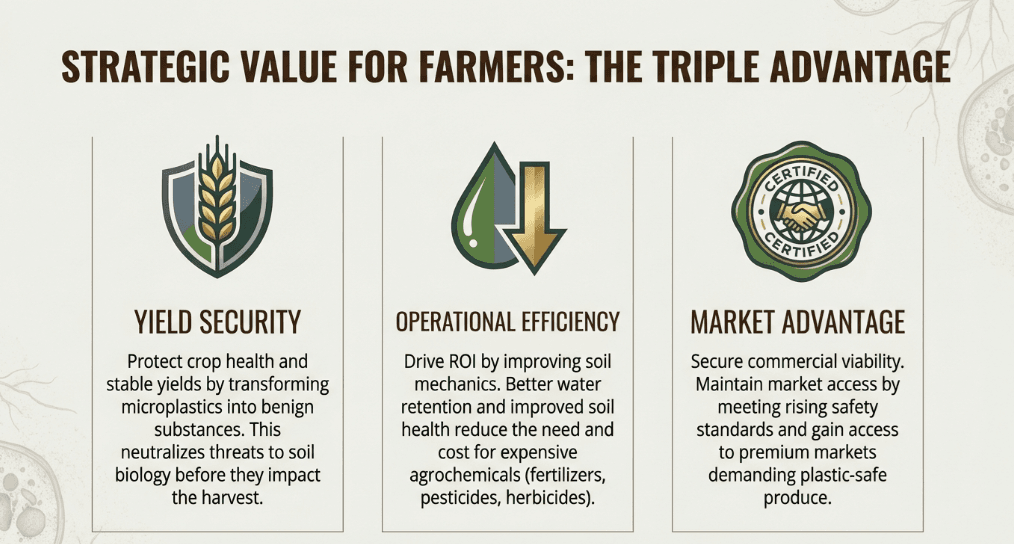
Protect Crop Health
Microplastics can affect soil health and crop growth. Our remediation removes contamination, protecting your yields and crop quality.
- ✓Remove microplastic contamination from soil
- ✓Protect crop health and growth
- ✓Maintain yield quality and quantity
Restore Water Cycle
Microplastics-free soil restores natural water cycling, reducing the need for artificial irrigation and improving water retention in your fields.
- ✓Significantly less artificial irrigation needed
- ✓Improved water retention and natural cycling
- ✓Save on water and irrigation costs
Reduce Drought Loss
With restored water cycling and improved soil structure, your crops are more resilient to drought conditions, significantly reducing yield losses during dry periods.
- ✓Better drought resilience
- ✓Prevent 20-50% yield losses during drought years
- ✓Protect revenue during challenging seasons
Reduce Fertilizer Needs
Our microbial consortia make nutrients in the soil available again, reducing fertilizer requirements by up to 20% while maintaining or improving yields.
- ✓Up to 20% less fertilizer needed
- ✓Microbes unlock existing soil nutrients
- ✓Lower input costs - save on fertilizer expenses
Maintain Market Access
As retailers increasingly require microplastics-free products, remediation ensures you can access premium markets and maintain buyer relationships.
- ✓Access premium markets with microplastics-free products
- ✓Meet retailer requirements and standards
- ✓Maintain and strengthen buyer relationships
Retailer Partnerships
Work with retailers who value clean supply chains. Our service helps you meet their requirements and build long-term partnerships.
- ✓Build partnerships with quality-focused retailers
- ✓Meet supply chain requirements and standards
- ✓Establish long-term, sustainable partnerships
How It Works
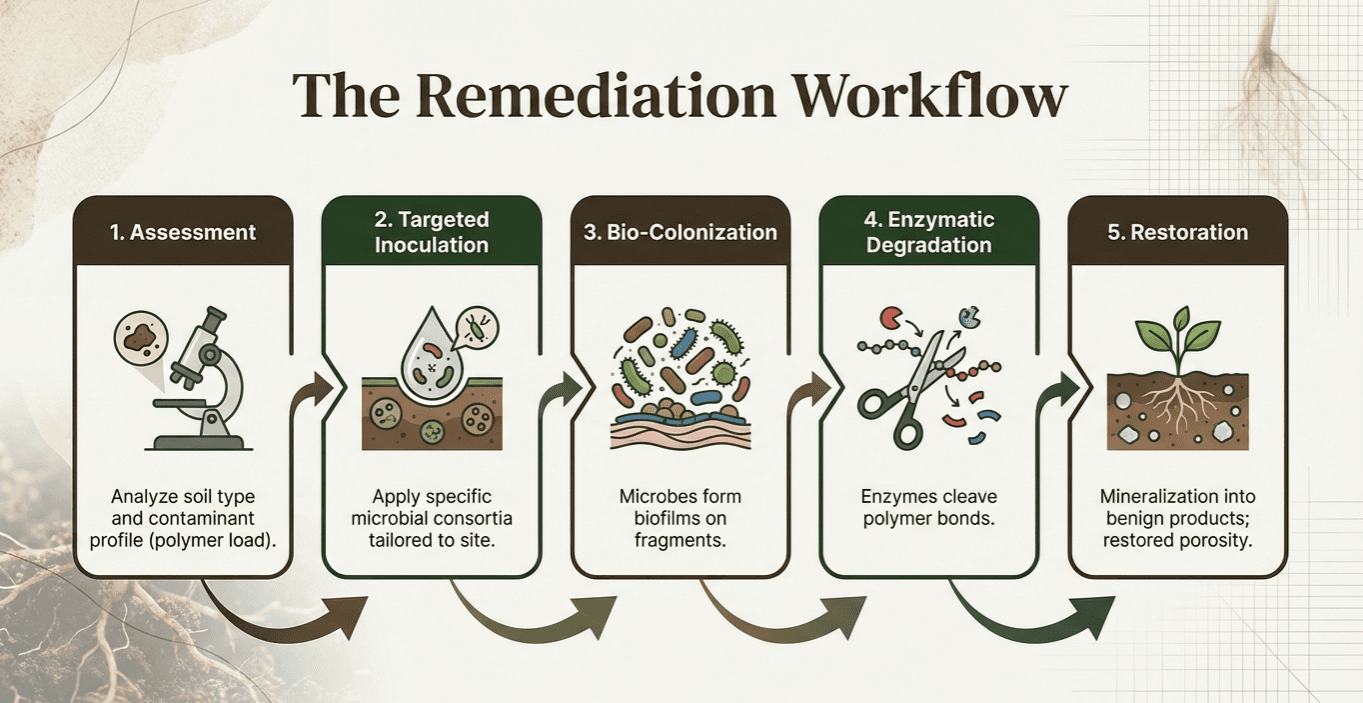
Assessment
We conduct comprehensive soil analysis to analyze soil type and contaminant profile (polymer load), understanding microplastic contamination levels and identifying remediation opportunities.
Targeted Inoculation
We apply specific microbial consortia tailored to your site. Our team designs farm-specific microbial consortia aligned with your soil type and farming practices.
Bio-Colonization
Microbes form biofilms on microplastic fragments, establishing a stable microbial community that colonizes the contamination sites for effective degradation.
Enzymatic Degradation
Microbial enzymes cleave polymer bonds, breaking down microplastics into smaller components through specialized enzymatic processes.
Restoration
Mineralization into benign products and restored soil porosity. The process results in improved soil health, better water retention, and enhanced crop growth.
Transparent Pricing
Our pricing model is straightforward, with no hidden fees or long-term commitments. Costs vary based on soil condition, contamination levels, and required intervention intensity.
What's Included:
- ✓Initial soil assessment and microplastic analysis
- ✓Custom microbial consortia formulation
- ✓Application and implementation
- ✓Ongoing monitoring and optimization
- ✓Regular reporting and support